Game Guides · Explainer 1/6
How Blackjack Works: The Rules for First-Timers
2 min
Worth rememberingBlackjack is one of the most widely played casino card games, partly because its basic idea is so simple: get a hand closer to 21 than the dealer's without going over. Behind…
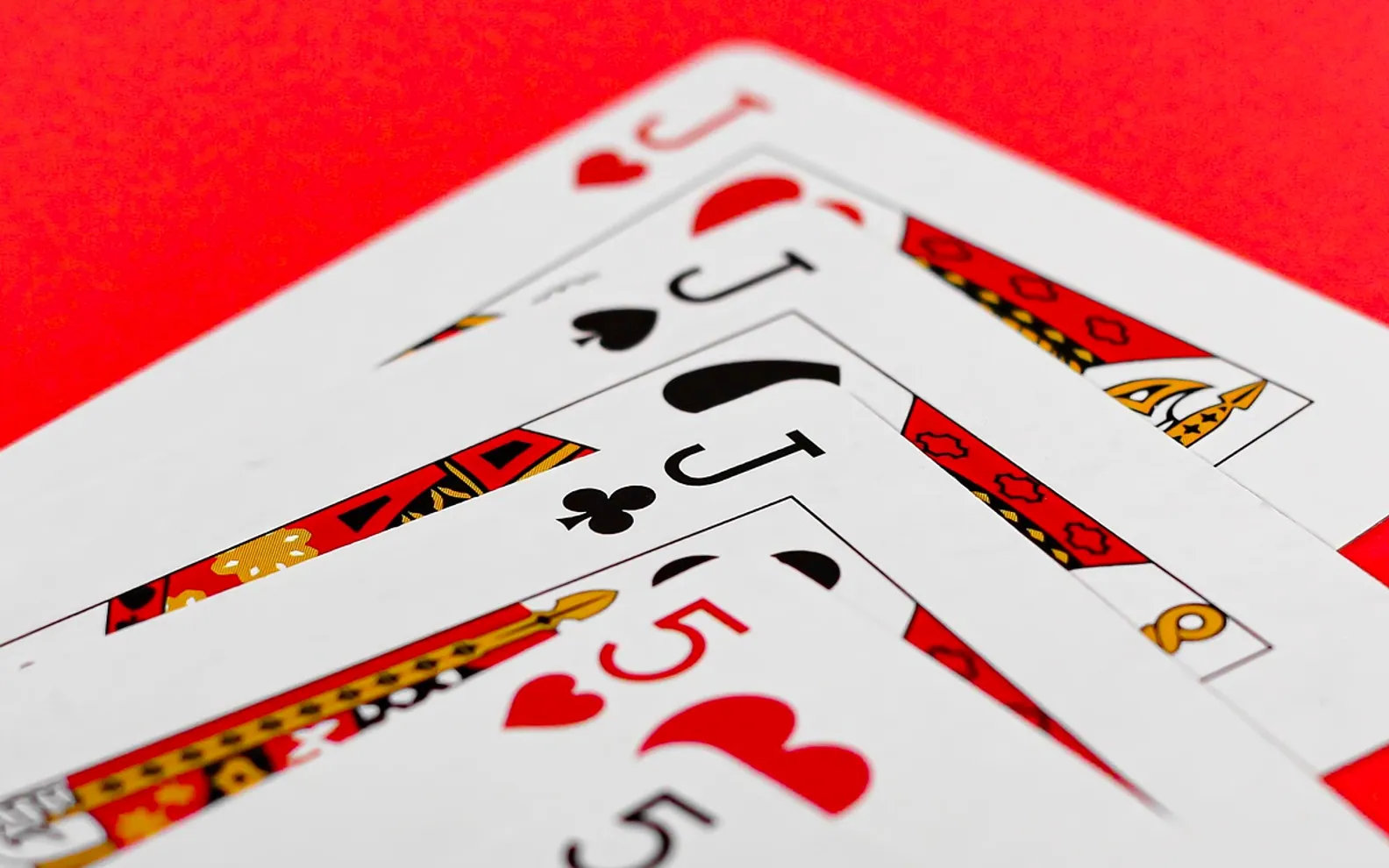
Blackjack is one of the most widely played casino card games, partly because its basic idea is so simple: get a hand closer to 21 than the dealer's without going over. Behind that idea sit a handful of rules and decisions that are worth understanding before you play, whether at a table or in a free practice game online.
Card values
- cards two to ten count at face value
- jacks, queens and kings count as ten
- an ace counts as one or eleven, whichever helps the hand more
A hand containing an ace counted as eleven is called a "soft" hand, because it can't bust with one more card. A "blackjack" is an ace plus a ten-value card as your first two cards.
The deal
Each player places a bet and receives two cards, usually face up. The dealer also takes two cards, one face up and one face down. You play your hand against the dealer's, not against the other players at the table.
Your options
- Hit — take another card.
- Stand — keep your current total.
- Double down — double your bet, take exactly one more card, then stand.
- Split — if your first two cards are a pair, split them into two hands with a second equal bet.
- Surrender — on some tables, give up the hand and get half your bet back.
If your total goes over 21, you "bust" and lose immediately, even if the dealer later busts too.
What the dealer does
The dealer has no choices. Once players have finished, the dealer reveals the hidden card and must draw until reaching a set total, usually 17. Some tables require the dealer to hit on a soft 17; others make the dealer stand. The rule is printed on the table or shown in the game information.
Winning and payouts
If your hand beats the dealer's without busting, you win even money. A natural blackjack traditionally pays 3 to 2, though some tables pay only 6 to 5 — a rule change that noticeably favours the house, so it's worth checking. A tie, called a "push", returns your bet.
Insurance
When the dealer shows an ace, you may be offered insurance: a side bet that the dealer has blackjack. It sounds protective, but for most players it's a poor-value bet and is commonly skipped.
Basic strategy, in brief
Because blackjack involves decisions, mathematicians have worked out the best play for every combination of player hand and dealer card. This "basic strategy" reduces the house edge but doesn't remove it. Many players learn it from printed charts or free training apps before playing for money.
Before you sit down
Read the table rules, choose a minimum bet that suits your budget and decide in advance how much you're prepared to lose. Blackjack rewards calm, consistent decisions — and so does responsible play.
18+ only. Gamble only where it is legal.